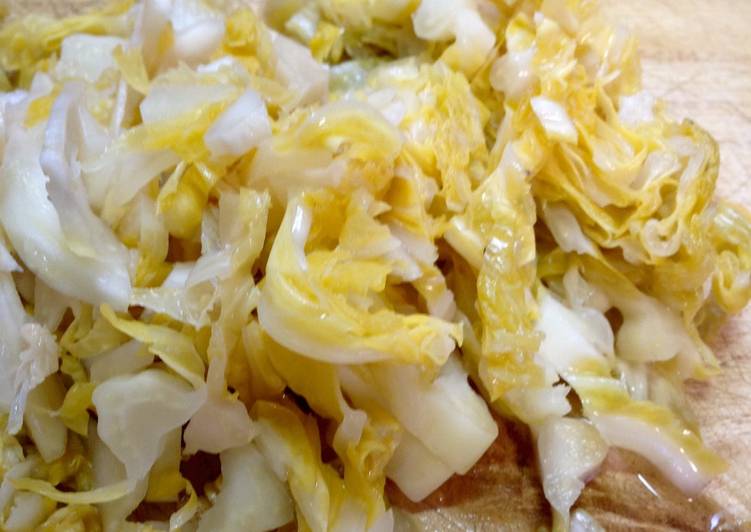
Hello everybody, it’s John, welcome to my recipe page. Today, I will show you a way to make a special dish, homemade sauerkraut (brine method for whole, half or quartered cabbage). It is one of my favorites. This time, I am going to make it a bit unique. This is gonna smell and look delicious.
Dissolve salt in hot water until no more grains are visible. I usually cut my cabbage in half or in quarters. This cabbage here is a called "filderkraut" or "spitzkohl" because of its shape.
Homemade Sauerkraut (Brine method for whole, half or quartered cabbage) is one of the most popular of recent trending foods in the world. It is enjoyed by millions every day. It’s easy, it is quick, it tastes yummy. Homemade Sauerkraut (Brine method for whole, half or quartered cabbage) is something which I have loved my whole life. They are nice and they look wonderful.
To get started with this recipe, we have to prepare a few components. You can cook homemade sauerkraut (brine method for whole, half or quartered cabbage) using 3 ingredients and 11 steps. Here is how you cook it.
The ingredients needed to make Homemade Sauerkraut (Brine method for whole, half or quartered cabbage):
- Get 750 g Cabbage (1 medium)
- Make ready 2000 ml water
- Make ready 100 g salt
Why is this sauerkraut better for you? This allows us to ferment the cabbage under a brine in an oxygen-free environment without killing the Lactobacillus. Many other types of bacteria don't handle salt or lack of. How to Make Homemade Sauerkraut - A Delicious Probiotics Rich Side Dish for Gut Health.
Steps to make Homemade Sauerkraut (Brine method for whole, half or quartered cabbage):
- Dissolve salt in hot water until no more grains are visible. Let cool completely.
- I usually cut my cabbage in half or in quarters. This cabbage here is a called "filderkraut" or "spitzkohl" because of its shape. Apparently it's good for sauerkraut, heh. Anyway you can use whatever kind of cabbage you want.
- Put whole or halved cabbage into a bucket or ceramic crock. Pour in the the cooled salt brine solution.
- The cabbage needs to be completely submerged under the water, so you need to weigh it down with something. I usually lay some plastic wrap over the top of the cabbage and then put a plate top.
- On top of that I put a heavy weigh like a jug of water, etc. (make sure the plate and the weight are washed and clean). Here I'm using a special ceramic weight for fermenting vegetables. Cover with a lid or cloth to keep things out of the container.
- Now just wait for the fermentation to happen! You'll probably start seeing bubbles after a couple days. Check the sauerkraut every day or two and skim off the bubbles. Make sure you label the date on your sauerkraut so you know how long it's been fermenting!
- The time you need to ferment depends on how warm or cold it is, as well as your taste preference. For me, in the winter I usually give the sauerkraut at least 4 weeks up to 6 weeks. In spring/autumn, maybe around 2-3 weeks. Summer could be 1-2 weeks, but if it's VERY hot, the sauerkraut won't taste that great, so I'd avoid hot weather.
- You can test by taking out the cabbage. It should have become somewhat softened and yellowish in color. It's okay to cut the whole cabbage open and check/taste the center. If you want it to ferment longer, just return it to the crock and let it go for another few days or longer.
- You can also start eating it "young" and keep fermenting the rest for longer so you can enjoy different stages of maturity. Just take some out and cut it up and return the rest of the chunk. If you don't want it to ferment anymore, then move the sauerkraut to the refrigerator.
- NOTE 1: The water will start to become cloudy/white-ish after several days or a week or two if it's cold. It's very likely you can get some white wrinkly, filmy looking mold developing at the surface of the water which is OKAY! You do not need to throw away the sauerkraut. Just continue to skim off as much as you can every day. Under the water the sauerkraut bacteria are creating an acidic, sour environment that prevents any "bad" bacteria and mold from surviving.
- NOTE 2: The sauerkraut will probably be smelly. That's OKAY too! It's just product of the fermentation process. Whenever I open the lid to check my sauerkraut, I open a window or turn on the ventilation fan :P
How To Make The Easiest Homemade Sauerkraut. This method, however, produces delicious sauerkraut (which means "sour cabbage") whose safety you can trust. Pour any brine left in your bowl over the cabbage and push down again to make sure everything is. Making a homemade fermented raw vegan sauerkraut can be much quicker and easier than it may There are numerous ways to make homemade sauerkraut, but this recipe keeps it at the bare The salt pulls the water from the cabbage which creates the brine that the sauerkraut will use to culture. A few years ago, homemade sauerkraut was just another DIY food trend, but happily now it looks like home kraut-making is here to stay.
So that is going to wrap this up for this exceptional food homemade sauerkraut (brine method for whole, half or quartered cabbage) recipe. Thank you very much for reading. I’m sure you can make this at home. There is gonna be more interesting food in home recipes coming up. Don’t forget to bookmark this page on your browser, and share it to your loved ones, friends and colleague. Thanks again for reading. Go on get cooking!